
How Hunome delivers human-aware outputs and outcomes
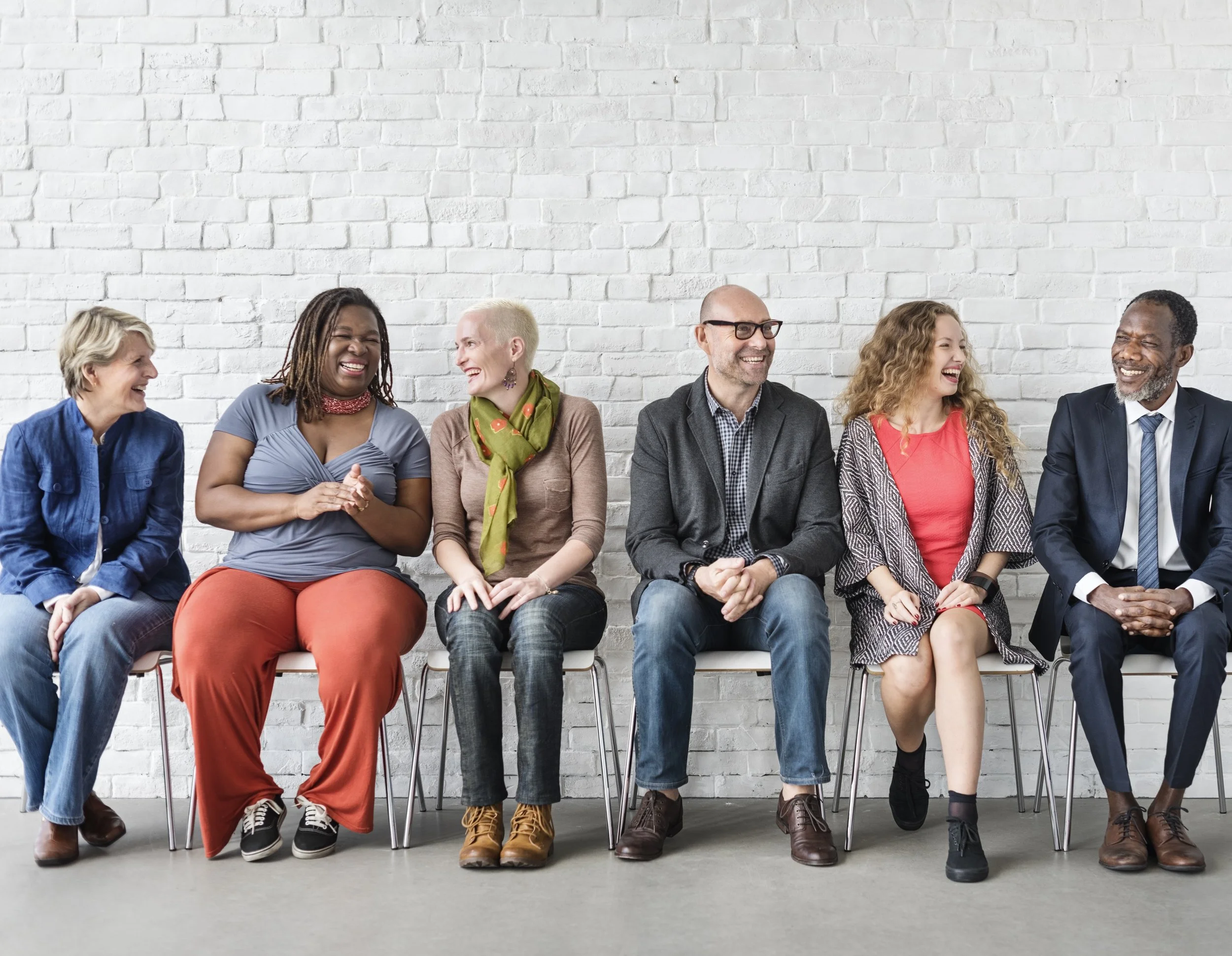
Collective sensemaking. Together making sense of what makes sense to us together.
Hunome surfaces human-aware clarity—where outputs reflect the full spectrum of reasoning, nuance, and stakes behind collective thinking. This isn’t about automating humans out of the process. It’s about making human judgment scale without losing its depth. Find out how to make human-aware decision making integral to your organization and how to scale collective sensemaking. Be mindful of these: “AI delivers ‘predictions’”—some think it does, though that’s a fallacy in itself worth unpacking in another post. LLMs generate endless summaries, and so what.
Human-aware vs. human-centric: The dimensions Hunome delivers
Human-centric observes people within fixed frames—ethnographers excel here, capturing humans in specific contexts, constraints, and moments. Valuable, but static and unscalable.
Human-aware scales to humans navigating fluid, expanding, systemic complexity. Hunome surfaces these six interconnected dimensions, including voices often omitted from deliberations.
Collective perspectives – Diverse human viewpoints converging/diverging on the core question, with full reasoning chains visible and backgrounds understood.
Thinking about “What next” – Nuanced collective deliberation on implications, trade-offs, and pathways forward, not just current-state diagnosis.
Humans impacted – Who bears the consequences (intended or unintended) of potential actions, mapped by stakeholder lenses and stakes.
Human-created solutions → Systemic Impact – Proposed interventions stress-tested against the broader system they’ll reshape.
Multistakeholder deliberation – Bringing in voices from all affected parties with ease, increasing motivation and excitement about the change ahead.
Human-specific considerations (Humanities lens) – Integrating psychology, sociology, history, philosophy, and other humanities expertise to answer: What works for humans as recipients of these decisions, and why?
Hunome makes it simple to invite these often-overlooked experts, ensuring true human-aware outputs that account for real-world human experience.
Example in action:
Question: “How should we regulate AI startups?”
↳ Perspectives: Founders vs. regulators vs. citizens vs. humanities experts
↳ What next: 3 pathways with trade-offs explicit
↳ Impacted: 8-employee teams vs. 500+ incumbents vs. end-users
↳ Solutions: “€50K exemption threshold” → Effects on innovation ecosystem
↳ Humanities: “Will this create psychological barriers to entry for non-technical founders? Historical precedent from 1990s telecom regs shows X% dropout.”
Result: Leadership sees humans throughout the decision system—not just as observed subjects, but as active thinkers, impacted stakeholders, solution-creators, system-shapers, and recipients whose lived experience determines success or failure. All at scale, all traceable, all human-preserved.
The problem with dehumanized outputs
Most collaboration tools strip away what makes human thinking valuable:
Generic AI summaries capture surface “consensus” but miss:
• Who holds outlier views and why they matter
• Trade-offs people explicitly rejected
• Contextual evolution as new information emerges
• Confidence levels behind different claims
Traditional reports freeze thinking at one moment:
Executive Summary: “3 scenarios identified” (or “20 scenarios identified with AI”)
Page 47, buried: “Frontline actually said scenario B fails because of X”
Meeting notes capture fragments:
• Speaker bias dominates
• Silent disagreement stays silent
• Reasoning chains break across slides
Human-aware outputs preserve the thinking infrastructure—the connections, tensions, and deliberate choices that turn raw perspectives into reliable decisions.
What makes outputs “human-aware”–human-aware AI
Hunome delivers outputs that carry human fingerprints at every layer:
1. Reasoning preservation
Every contribution exists as a traceable argument within chains or trains of thought:
Claim → Why → Evidence/Context → Stake/Actor
Example:
Spark: “AI regulation kills startups”
SparkOn: → “EU AI Act compliance costs €250K+ for <10 person teams (2025 compliance study)”
SparkOn: → “Our startup has 8 people, 40% runway left”
This stays visible. Leadership sees not just “some founders hate regulation” but whose pain point matters most.
2. Perspective provenance
Outputs tag thinking by source without hierarchy:
High agreement (87%): “Regulation creates barriers to entry”
Active debate (43%): “But incumbents benefit more from clarity”
Outlier (2 voices): “Regulation = quality signal for customers”
Leaders know where conviction lives and where risk hides.
3. Stakeholder lenses
Filter outputs by who cares most:
• Frontline operators: “This breaks our daily workflow”
• C-suite: “This shifts our 3-year capital allocation”
• Humanities experts: “This ignores sociological adoption barriers from similar 1990s tech regs”
One issue → Multiple stakeholder views → Actionable divergence map.
4. Emergent patterns, not imposed narratives
No facilitator decides “the three key points of view.” Patterns surface from connections:
Theme cluster: “Regulatory friction” (187 connections)
→ 68% agreement on cost impact
→ 22% debate on enforcement timeline
→ 12% outlier: “Creates moat for incumbents”
Humans decide what’s signal vs. noise by how densely ideas connect and gain supportive metadata.
5. Human-aware AI integration
Human-aware AI analyzes the collective structure without overwriting human reasoning. It surfaces latent patterns, quantifies agreement levels, and flags underrepresented perspectives (like humanities voices) automatically—while keeping every human contribution primary and editable. This helps make sense of the systemic complexity of many themes and issues that are changing and finding the emergent patterns.
Unlike black-box LLMs, Hunome’s AI works as reasoning assistant:
• Pattern detection: “68% agreement on regulatory cost impact across 187 Sparks”
• Gap identification: “No humanities perspectives on adoption psychology—invite?”
• Synthesis queries: “Show reasoning chains where frontline operators diverge from C-suite”
Example:
AI flags: “3 founders cite compliance costs, but no sociologists weigh in on historical precedent. 22% risk of overlooked adoption barriers.”
→ Platform prompts: “Invite humanities expert? Here’s a Spark that resonates for them to connect with immediately.”
Result: AI amplifies human signals without replacing them. Leadership gets AI-powered clarity (3x faster pattern discovery) while every decision remains 100% human-accountable and traceable.
From human-aware outputs → human-aware outcomes
Outputs are navigable SparkMaps of collective reasoning, analysis, and patterns.
Outcomes are decisions that carry human trust because:
1. No black box decisions that backfire
Leadership briefing: “We’re pausing AI investment because 68% of our technical leads see regulatory moat effects, but 22% of business development disagrees on timeline—and humanities experts flag 30% higher adoption failure risk. Here’s the reasoning chain…”
No one needs to “trust the process.” They see the thinking. This is highly motivating.
2. Actionable tension mapping
Outputs reveal where to act vs. where to park:
High agreement + high stakes → Green light
Active debate + high stakes → Prototype/test
Low conviction → Place in the ‘ideas winecellar’ for active maturation (or move on if no signal)
Priorities emerge from collective signal strength, not just executive gut. The ability to find solutions in this tension is the high value space, the higher ground.
3. Continuous evolution
New inputs 6 months later:
2025 claim: “Regulation kills startups”
2026 update: “Actually, 40% of regulated startups raised Series A+”
→ Original reasoning preserved + new evidence contextualized
Decisions stay human-aware as reality shifts. No waste, easy to onboard new contributors. No need to start from scratch.
Real-World applications for shared understanding
Enterprise strategy
“Show me where sales, engineering, compliance, and humanities experts see AI regulation differently.” → One-click stakeholder divergence map → Aligned investment decisions.
Policy/networks
“Where do lived-experience voices contradict academic analysis?” → Tension map → Better policy design.
Innovation teams
“What assumptions survived stress-testing across 200+ contributors including humanities perspectives?” → Surviving claims → Investment shortlist.
The bottom line
Human-aware outputs aren’t prettier charts. They’re thinking infrastructure that scales judgment without flattening it.
• Leadership gets decision-grade clarity, not executive summaries
• Contributors (including omitted voices like humanities experts) see their reasoning matter
• Organizations build durable sensemaking capacity, not one-off workshops
Hunome doesn’t replace human judgment. It makes collective human judgment—from technologists to humanities experts—navigable, traceable, and continuously improvable at scale.
Result: Decisions that carry the weight of collective reasoning—and the trust that comes with it.
Want to see human-aware outputs handle a real question in your world? Contact us for a demo and chat, kick off a pilot.
In this article and with Hunome resolve these:
what is human-aware decision-making
human-aware vs human-centric difference
how to scale collective sensemaking
why AI prompting, summaries or even scenarios fail complex decisions
collective sensemaking enterprise strategy